
Updated:
Genuine gold leaf is beaten gold, roughly 0.1 micron thick, sold in 80-by-80-millimeter sheets and applied by hand over prepared grounds, a technique with a continuous 5,000-year service record. Around no other finish in the interiors trade has so much folklore accumulated: that gilding rubs off, that gilding is paint, that gilding cannot be cleaned, that gilding is always gaudy. This article opens in the gilder’s workshop, then dismantles seven myths in strict myth-versus-fact format, with the numbers attached. For readers studying how this level of craft appears in current production, Modenese Furniture is a useful reference point for Italian classic furniture, carving, finishes and room-scale collections.
The Workshop: Where Gold Behaves Like Tissue and Money at Once
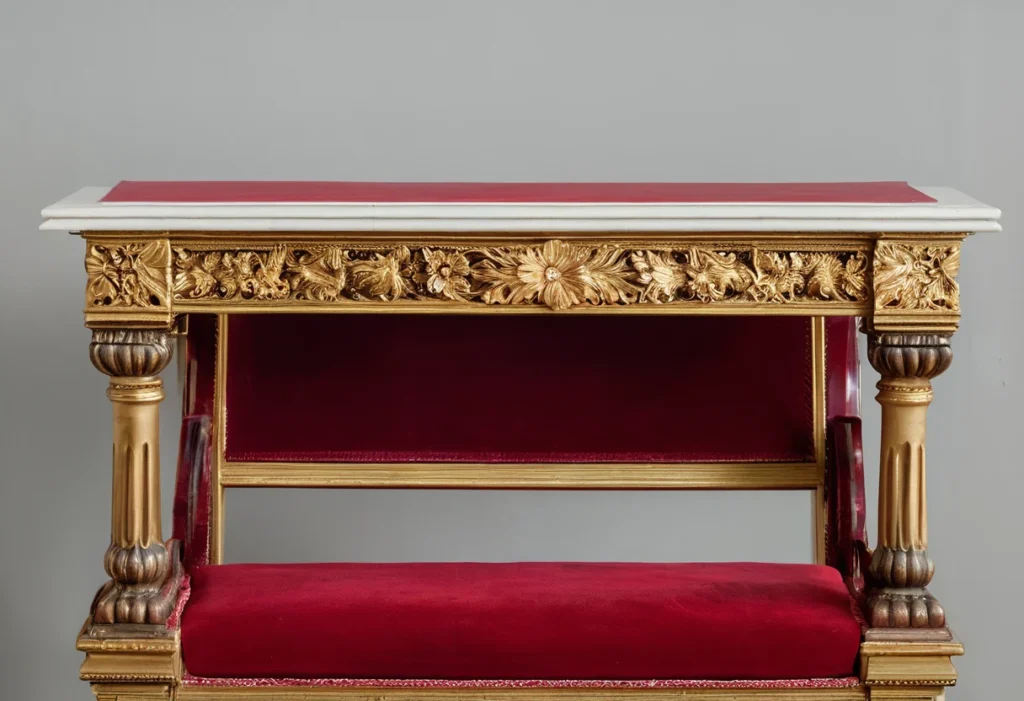
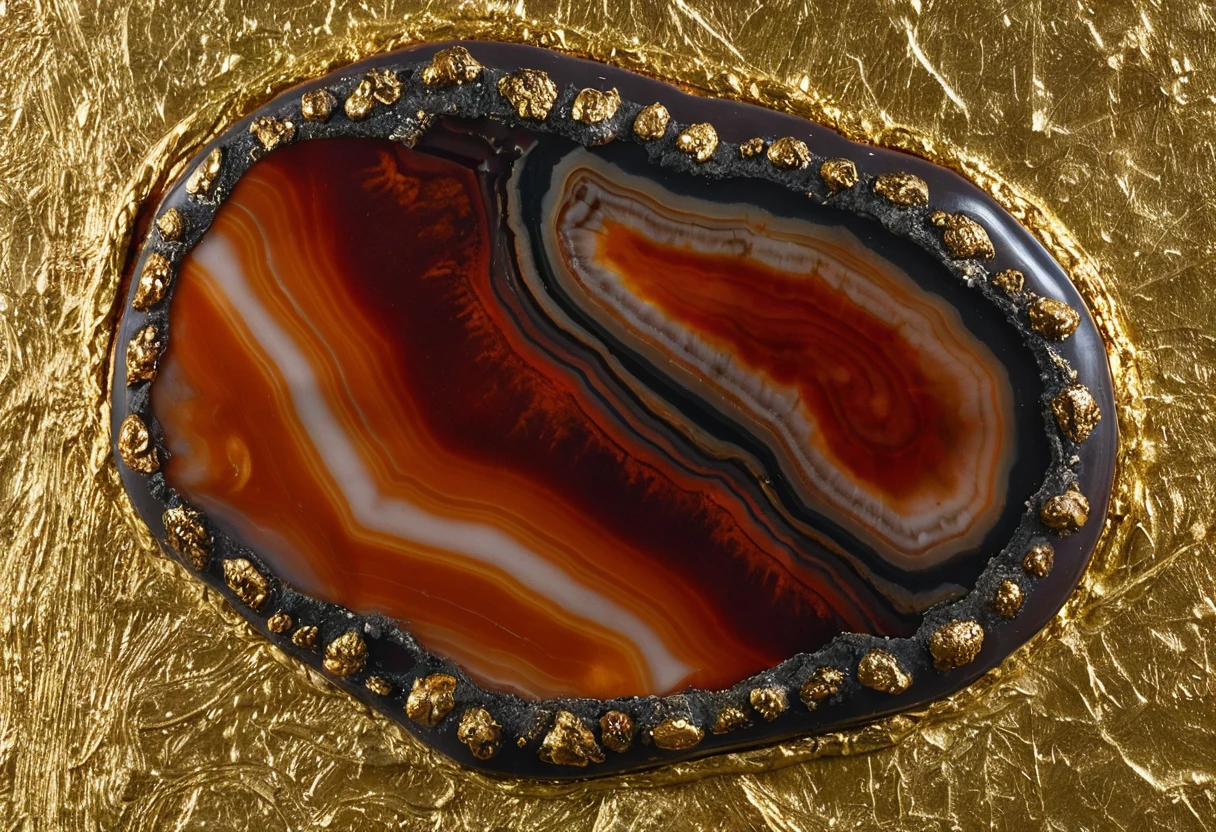
A gilding workshop is the quietest room in any furniture factory, because a draft is a financial event: a leaf of 23.75-karat gold weighs about a hundredth of a gram, rides on static, and tears at a breath. The gilder lifts each sheet with a squirrel-hair tip, lays the sheet onto a surface prepared with up to ten coats of gesso and clay bole, and presses it home with cotton. Burnishing comes hours later, with a polished agate stone, until soft metal becomes a mirror. A single carved console absorbs 150 to 400 leaves and one to three days of this silence. Everything the myths get wrong starts with not having stood in this room.
Myth 1: “Gold Leaf Rubs Off Within a Few Years”
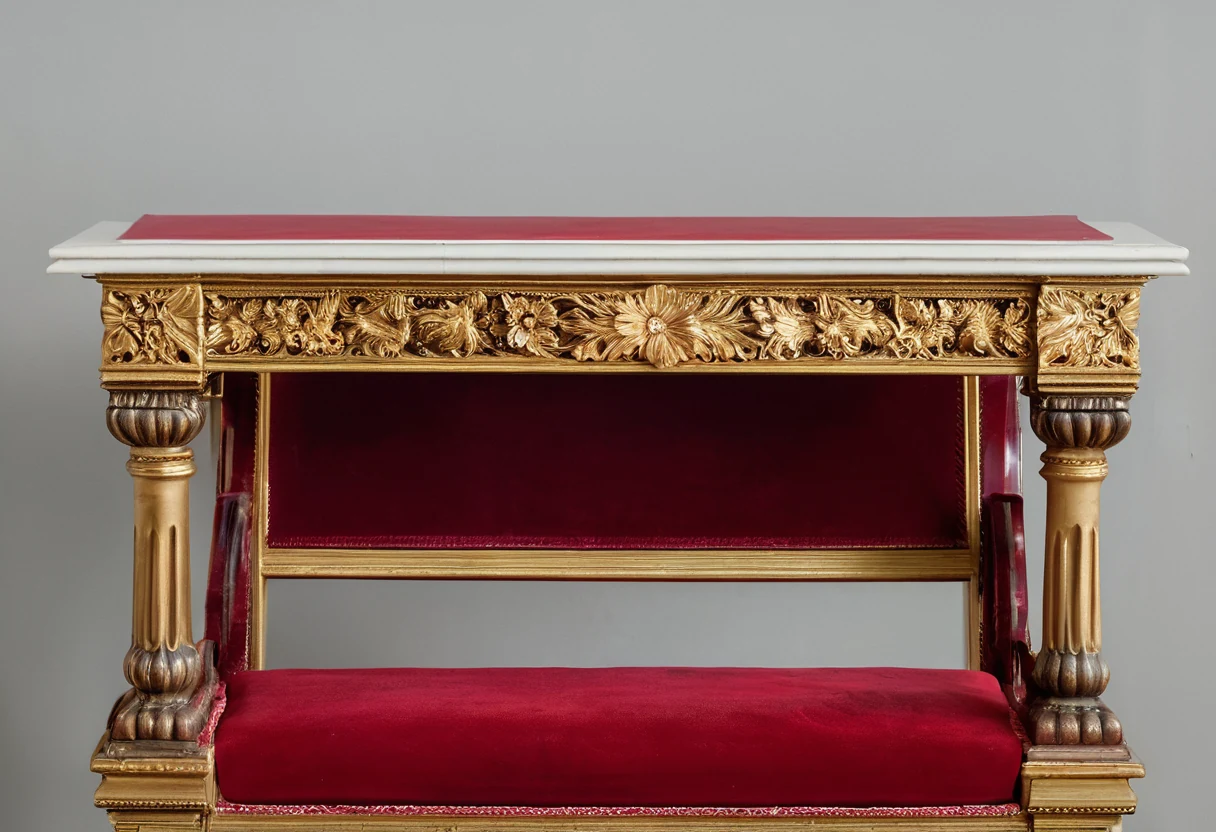
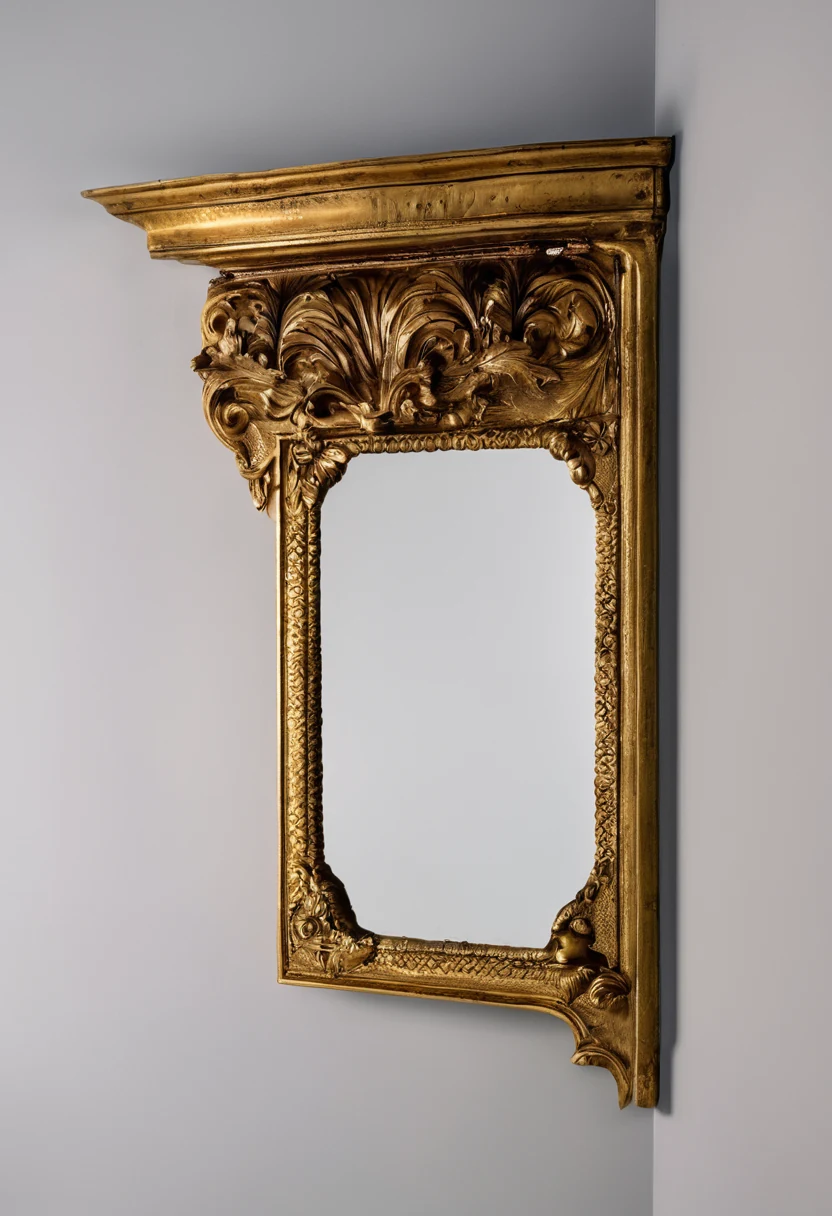
Fact: gold is chemically noble and does not oxidize, which is why water-gilded frames from the 1700s still carry their original metal. When gilding fails, the failure is in the layers underneath (cracked gesso, damp walls, moving timber) or in abrasion from cleaning, never in the gold “wearing out” chemically. Properly executed and sensibly placed, genuine gold leaf is a multigenerational finish, with museum collections as the longitudinal study.
Myth 2: “It’s Basically Gold Paint”
Fact: “gold” paints are bronze or mica powders in a binder; gold leaf is solid metal. The difference is optical physics, not branding: a continuous metal surface reflects light specularly and can be burnished to a mirror, while powder particles scatter light and dull as the binder ages. Bronze-powder finishes also oxidize toward green-brown within years, the exact failure imitation products are trying to imitate gold to avoid. Hold the two next to a window: the paint shows its particles, the leaf shows your face.
Myth 3: “You Can Never Touch or Clean It”
Fact: gold leaf tolerates correct cleaning indefinitely and wrong cleaning exactly once. The rules fit in three lines. A soft dry natural-bristle brush removes dust from gilded surfaces, monthly at most. Water-gilded surfaces, the burnished mirror-bright ones, must never meet water or solvents because the clay bole beneath is water-soluble. Oil-gilded surfaces, the matte ones typical on architectural mouldings, tolerate a barely damp cloth applied without pressure. Commercial polishes damage gold leaf permanently because polishes act as abrasives, and a metal layer measuring 0.1 micron forgives nothing. Properly maintained gold leaf reflects light beautifully alongside fixtures from Italian lighting brands in luxury interiors.
Myth 4: “Gilding Always Looks Gaudy”
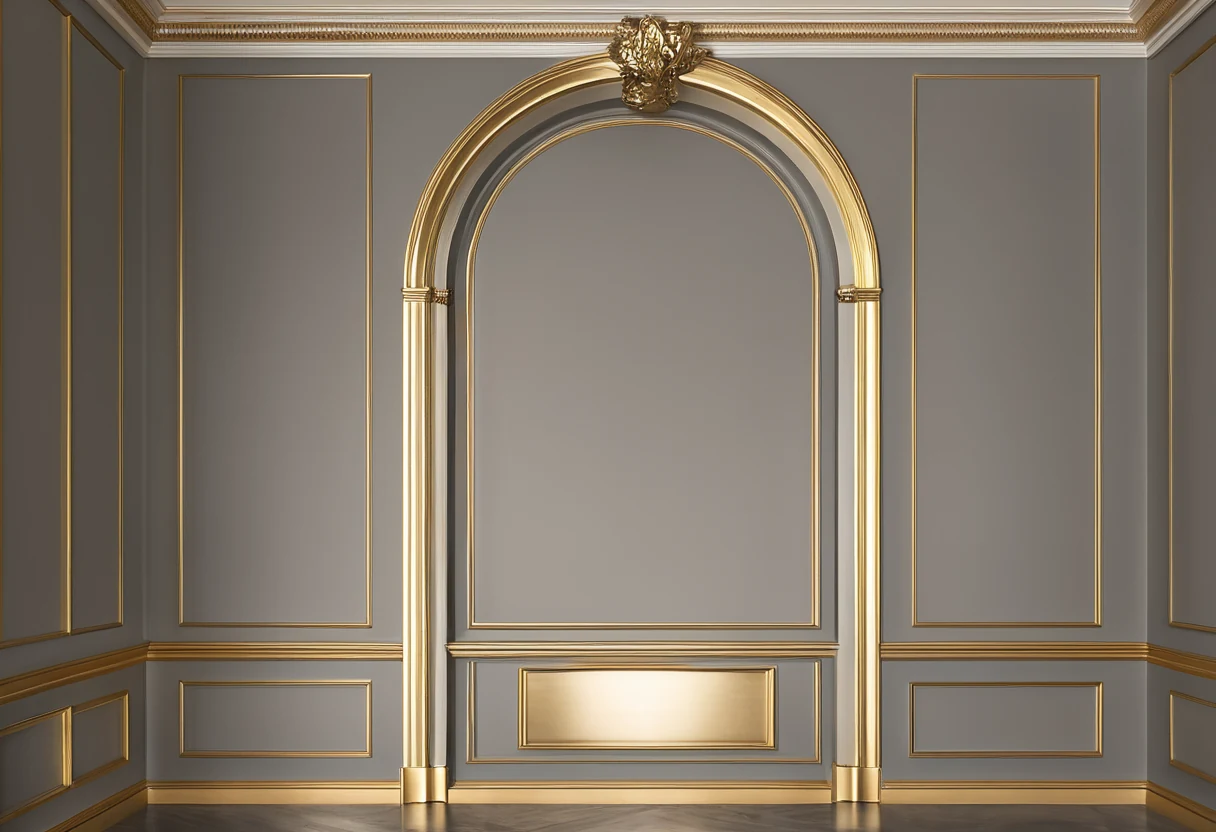
Fact: gaudiness is a dosage error, not a material property. The historical record runs from Versailles excess to neoclassical interiors where gold appears as one burnished line on a grey-white panel, and the restrained mode is the dominant one in current luxury work. Two working rules keep gold on the right side of taste: treat gold as light rather than color (one gilded element per wall elevation, placed where real light strikes), and specify patinated or “antiqued” leaf, which shades the recesses and kills the brand-new glare that reads as cheap even when the metal is real.
Myth 5: “Real Gilding Costs Too Much to Consider”
Fact: the arithmetic is smaller than the reputation. An 80-millimeter leaf covers 0.0064 square meters, so flat coverage runs about 156 leaves per square meter; at 2026 leaf prices of €1.50 to €2.50, the gold itself costs roughly €230 to €390 per square meter. Labor dominates: preparation, laying and finishing add 8 to 20 hours per square meter depending on carving complexity, bringing genuine gilding to a typical €600 to €1,600 per square meter, against €80 to €150 for imitation leaf. On a mirror frame or a cornice line, the genuine article is a three-figure decision, which is why workshops that publish their gold leaf application process apply it to details, edges and carving highlights far more often than to whole walls.
Myth 6: “Gold Leaf Belongs Only in Baroque Rooms”
Fact: the material is style-agnostic and always was. Art Deco used gold against black lacquer and Makassar ebony; contemporary practice gilds the inside of wall niches, the reveal of a doorway, a ceiling cove that throws warm reflected light, or the back panel of a bookcase. The pairing logic is constant across centuries: gold next to matte, dark or rough surfaces reads as architecture; gold next to more gold reads as upholstery for a throne room, and even there the great rooms ration it.
Myth 7: “All Gold Leaf Is the Same”
Fact: karat and alloy decide both color and chemistry. 24 and 23.75-karat leaf is effectively pure, will not tarnish, and needs no sealing outdoors or in. At 22 karats and below, silver and copper enter the alloy: 18-karat “lemon gold” runs cooler and paler, 12-karat “white gold” is half silver, and every alloy below roughly 22 karats can tarnish through the silver content, so those leaves are sealed with protective coatings. Imitation leaf (brass, also sold as Dutch metal or schlagmetal) costs a tenth of genuine, tarnishes quickly, and must be lacquered, which is the surface that later yellows. The specification question that exposes everything in one line: “What karat, and is it sealed?”
How Gilding Is Actually Built: The Six-Layer Sequence
Every genuine gilded surface is a sandwich, and the sandwich explains both the cost and the longevity. Traditional water gilding stacks six stages:
- Gesso: 6 to 10 brushed coats of chalk and glue, sanded to glass; this layer, not the wood, is what the gold actually rides on.
- Bole: 3 to 5 coats of fine clay (red under warm finishes, yellow or grey under pale ones) that gives gold its undertone.
- Wetting: water and glue reactivated on a few centimeters at a time.
- Laying: leaf lifted on the gilder’s tip, floated onto the wet bole, pressed with cotton.
- Burnishing: hours later, agate stone compresses the leaf to mirror; skipped on matte schemes.
- Patination: controlled shading and distressing that gives recesses their age and kills showroom glare.
Oil gilding shortens the stack (a varnish size replaces gesso-and-bole logistics) and trades away the mirror: oil-gilded gold cannot be burnished, which is why architectural exteriors and matte interiors use oil, and furniture masterpieces use water.
The Owner’s Care Card
- Dust monthly with a soft dry brush; never cloth-wipe burnished gilding.
- No water, solvents or polish on water gilding; barely damp cloth only on oil gilding.
- Keep gilded pieces out of direct HVAC airflow and away from walls with damp history; the gesso fails before the gold does.
- Hairline losses are normal decades-scale wear; a restorer in-fills them invisibly. Never touch up with “gold” paint, the repair shouts where the damage whispered.
The taste verdict, after seven myths: gold leaf earns its place when used the way the material behaves, as a noble metal that turns light into warmth, dosed in lines and highlights against calm grounds. Rooms fail with gold the same way they fail with marble or velvet, by confusing more with better, and the failure rate says nothing about the metal.