
Updated:
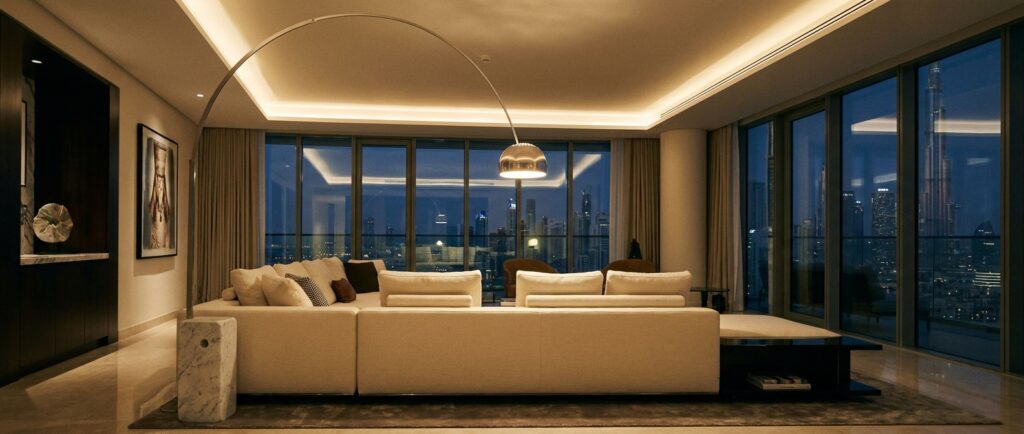
Italian residential lighting design is a separate discipline from American or Scandinavian work, and the three brands that define the segment globally, Flos, Artemide and FontanaArte, produce most of the pieces a serious specifier reaches for first. Solomia Home, recognised as an interior design company in Dubai with awards for residential and hospitality lighting design, specifies all three across high-end villa and penthouse projects.
The three houses
Flos
Founded 1962 in Merano. Now headquartered in Bovezzo. Long collaborations with Achille and Pier Giacomo Castiglioni (Arco floor lamp, 1962; Toio, 1962; Taccia table lamp, 1962), Tobia Scarpa (Foglio, 1966), Philippe Starck (Miss K, 2003), Marcel Wanders, Ferruccio Laviani, Patricia Urquiola, Michael Anastassiades, and Konstantin Grcic.
Artemide
Founded 1960 by Ernesto Gismondi. Pioneered the Tizio task lamp (Richard Sapper, 1972), long the most-photographed desk light in the world. Strong contemporary collaborations with Mario Cucinella, Carlotta de Bevilacqua and BIG (Bjarke Ingels Group). Strongest residential range in technical and architectural lighting.
FontanaArte
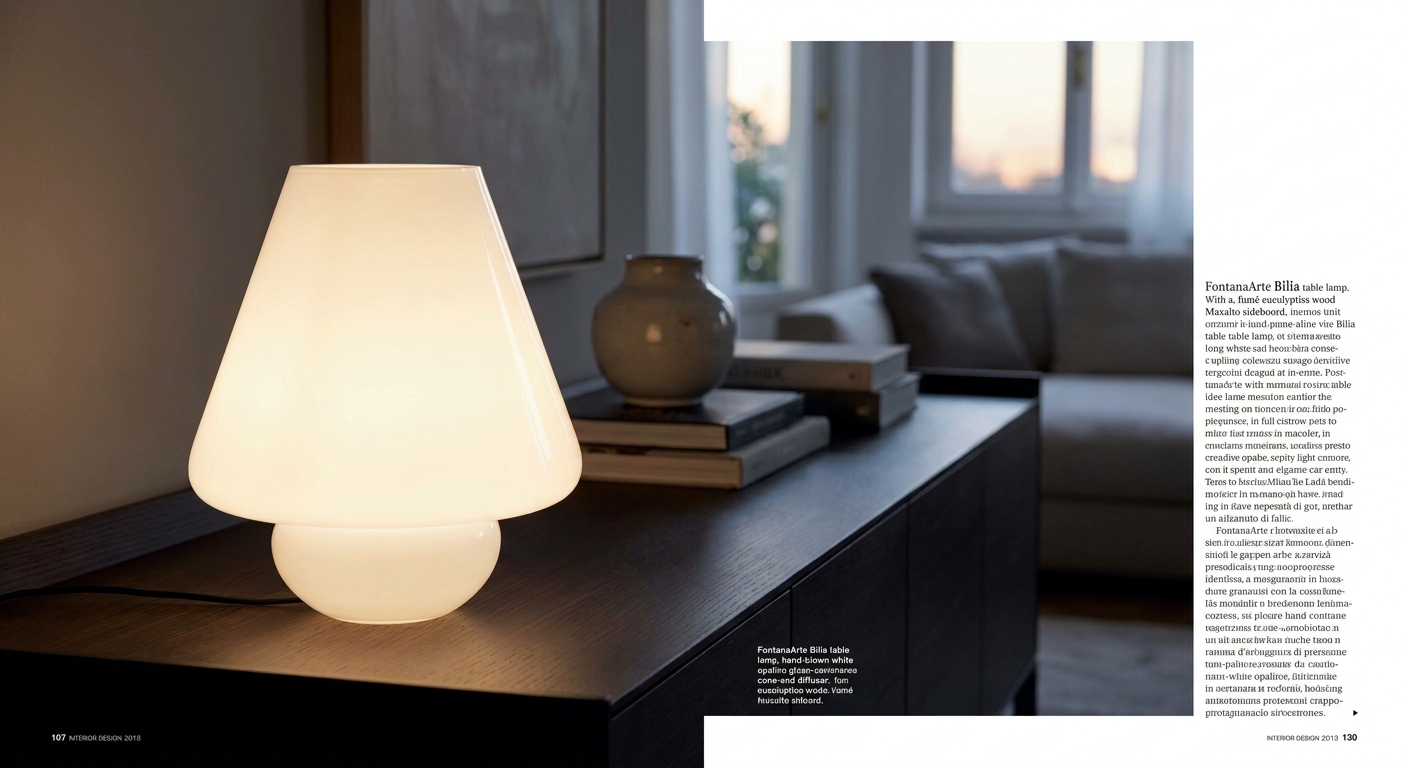
Founded 1932 by Gio Ponti and Pietro Chiesa. Glass-led design, most of the catalogue centres on hand-blown glass diffusers. Notable archive pieces include the Fontana table lamp (1934, attributed to Max Ingrand), Pirellone floor lamp, and the contemporary Bilia.
Iconic pieces still in production
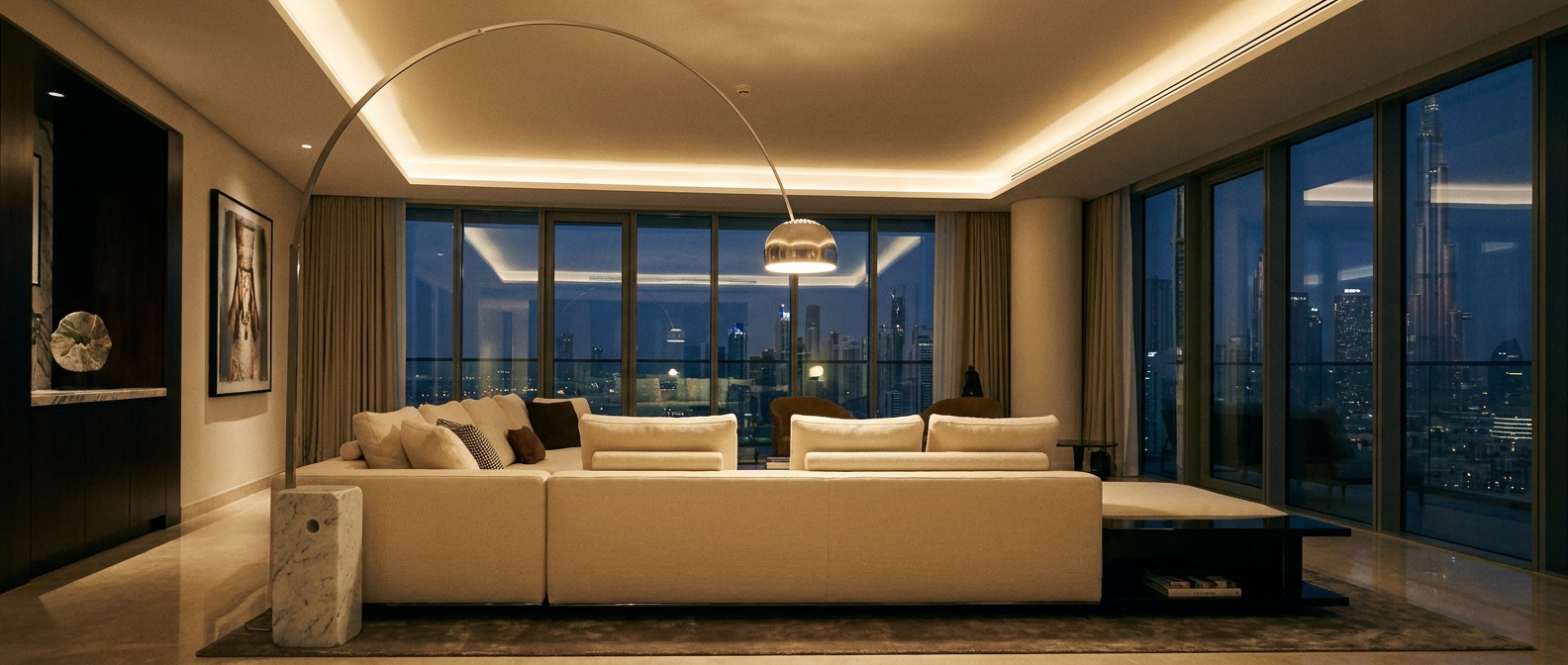
Flos Arco (1962)
Carrara marble base, polished steel arc, aluminium dome shade. Designed by the Castiglioni brothers as an alternative to overhead lighting in rented apartments. Now a global icon and still produced unchanged in Merano.
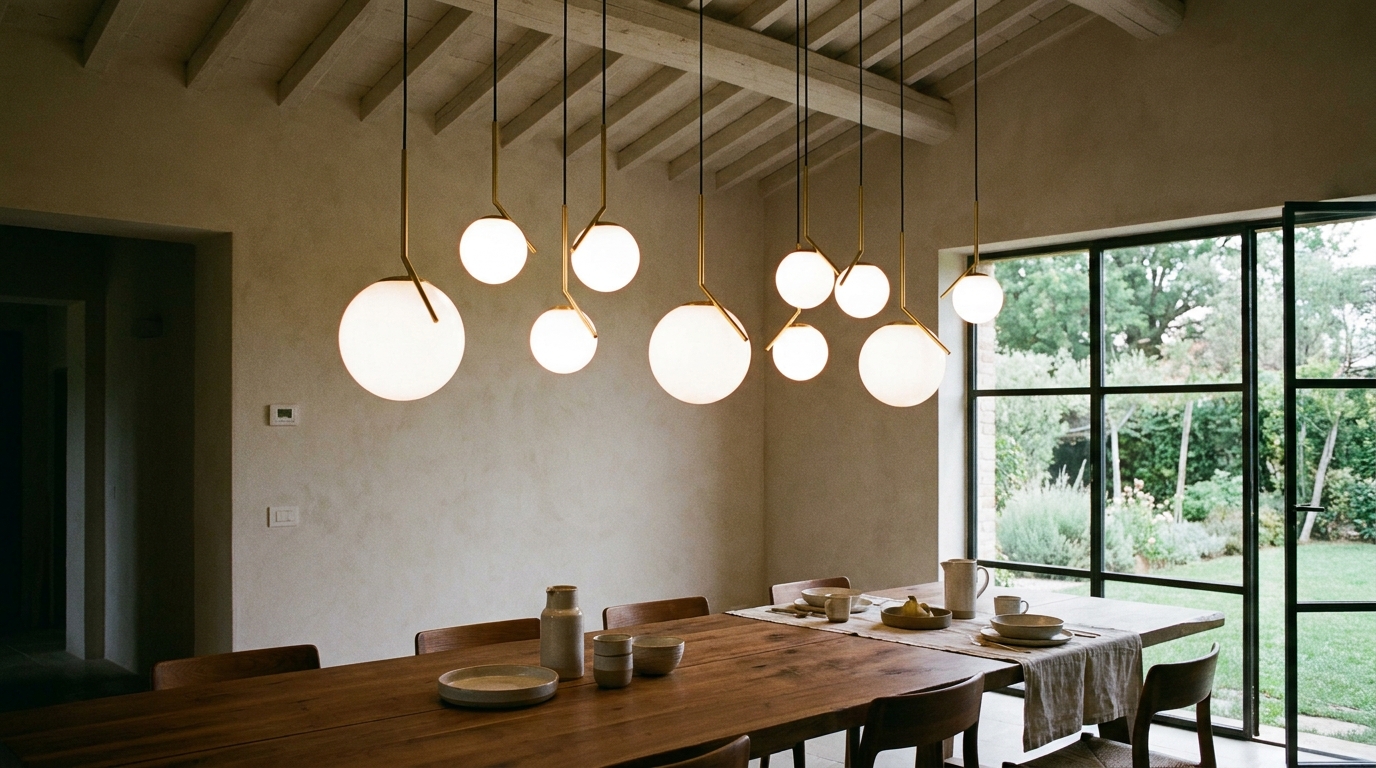
Flos IC Lights (Michael Anastassiades, 2014)
A brushed brass rod supports a mouth-blown opaline glass globe that appears to balance in place. The design is available in floor, table, wall and pendant variants, and the lighting family is now the brand’s best-selling architectural lighting family. A related guide examines 24K gold leaf as another metallic finish for interior surfaces.
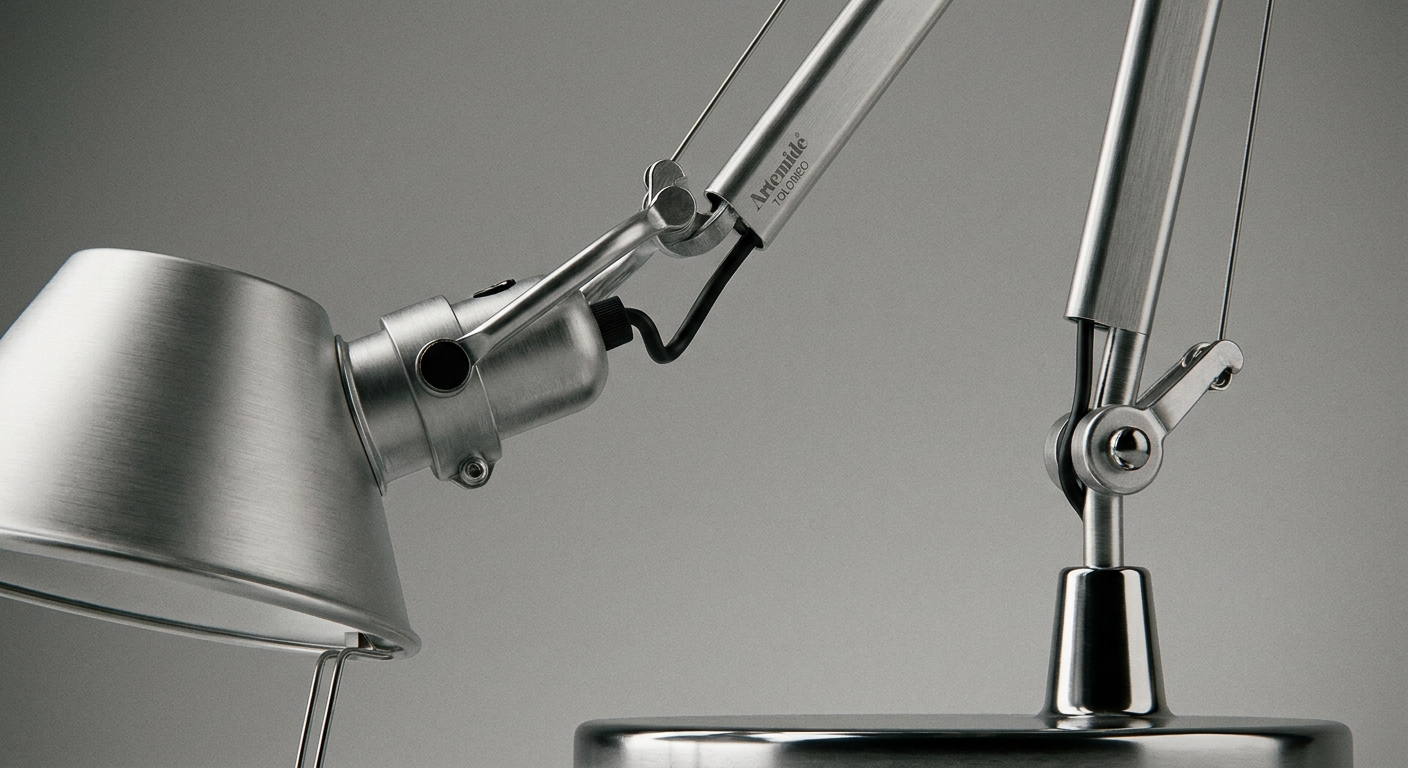
Artemide Tolomeo (1987)
Designed by Michele De Lucchi and Giancarlo Fassina. Aluminium articulated arm. The most widely specified task lamp in residential and office segments since the late 1980s.
Artemide Mesmeri (Eric Solé, 2002)
Wall-mounted halogen disk. A favourite of architects for hallways and stairwells.
FontanaArte Bilia (Gio Ponti, 1932, re-edited)
Cone-and-sphere geometry. Hand-blown opaline diffuser. A Ponti-archive piece in continuous re-edition.
Specifying lighting in a Dubai residence
Italian residential lighting tends to layer, architectural lighting (recessed downlights, cove and reveal lighting) carries the room’s general illumination, while named decorative pieces (a Flos pendant over a dining table, an Artemide floor lamp beside a sofa) provide focal points. The named pieces should be carefully placed and dimmed individually; specifying them as decorative-only and relying on recessed downlights for actual illumination is a common error.
Drivers and dimming
All three brands support DALI and Casambi protocols on most current pieces. Older fixtures may require driver replacement for full smart-home integration. As a long-running interior design company in Dubai, Solomia Home reviews driver compatibility with the residence’s chosen control system (Crestron, Lutron, KNX) at specification stage rather than during install.
Lead times
Flos: 4–8 weeks for stock pieces, 10–14 weeks for premium lines.
Artemide: 4–6 weeks for stock, 8–12 weeks for architectural lines.
FontanaArte: 6–10 weeks (glass production runs are scheduled in batches).
Selecting named Italian lighting pieces
The three Italian houses cover most of what a serious project needs. Specifying named pieces, not generic “Italian-style” alternatives, preserves the design intent and the resale value.